Dr. Dimple Doshi (MBBS, MD, DGO)
Lady Gynecologist & Laparoscopic Surgeon
27+ years’ experience
20,000+ surgeries completed
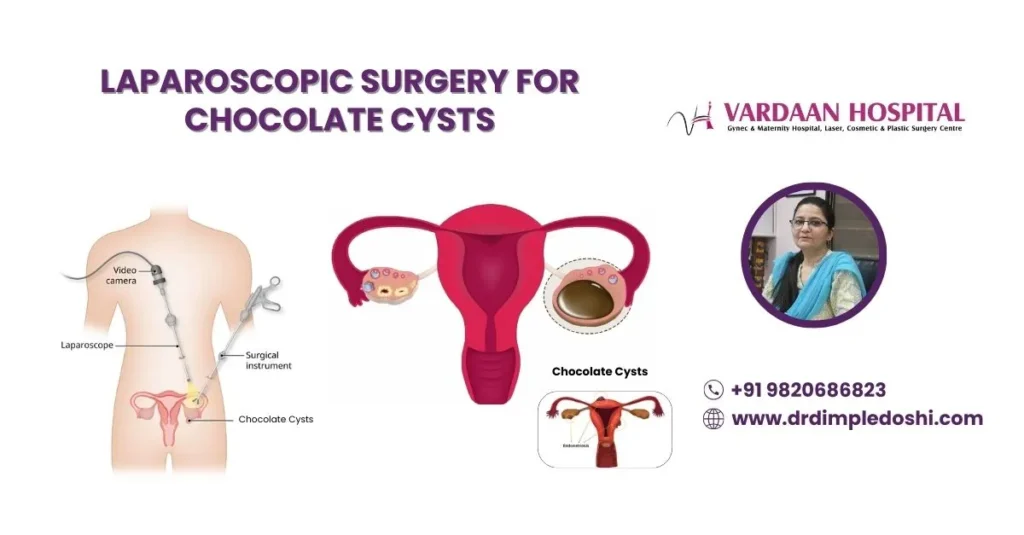
Are you struggling with unbearable menstrual pain, painful intercourse, or difficulty conceiving? These symptoms may indicate endometriosis—a condition where tissue similar to the uterine lining grows outside the uterus. In some cases, it forms chocolate cysts (endometriomas) on the ovaries, which can damage fertility and cause chronic pain.
Ignoring endometriosis can lead to worsening pain, adhesions, and irreversible damage to reproductive organs. For many women, the delay in diagnosis means years of suffering, missed workdays, and emotional distress—impacting not just health but quality of life and relationships.
The good news? Advanced laparoscopic surgery offers a safe and effective solution. This minimally invasive procedure removes endometriotic lesions and chocolate cysts while preserving fertility whenever possible.
At Vardaan Hospital, Dr. Dimple Doshi uses state-of-the-art 3D laparoscopic technology to ensure precision, faster recovery, and reduced recurrence—helping you live pain-free and improve your chances of natural conception.
Endometriosis is a condition where uterine lining tissue grows outside the uterus, causing pain, inflammation, and fertility issues.
Chocolate cysts, or ovarian endometriomas, are fluid-filled sacs formed from old menstrual blood trapped in the ovary due to endometriosis.
Untreated endometriosis can lead to chronic pain, infertility, adhesions, and even organ damage like bowel or kidney involvement.
Symptoms include severe period pain, painful sex, bloating, chronic fatigue, and infertility in advanced stages.
Laparoscopy offers high precision, faster recovery, and better fertility outcomes compared to open surgery for endometriosis and cyst removal.
Laparoscopic surgery removes endometriotic implants, adhesions, and nodules while preserving healthy tissue and restoring pelvic anatomy.
The cyst wall is excised and adhesions released through tiny incisions, ensuring pain relief and lower recurrence risk.
Women with severe pain, infertility, or failed medical management are prime candidates for laparoscopic endometriosis treatment.
Preparation includes medical evaluation, fasting, and medication adjustments to ensure a safe and successful procedure.
Laparoscopic surgery involves inserting a camera and instruments through small incisions to remove lesions and restore anatomy.
Post-surgery care includes pain management, early mobilization, and wound care for a smooth recovery process.
Most women resume light activity in 7–10 days, while complete internal healing takes 6–8 weeks.
Though rare, risks include bleeding, infection, organ injury, and recurrence of endometriosis.
The cost varies based on complexity and hospital category, ranging from ₹50,000 to ₹2,00,000 at Vardaan Hospital.
With 25+ years of experience, advanced 3D laparoscopy, and patient-focused care, Dr. Doshi ensures optimal outcomes for endometriosis treatment.
| ICD-10 Code | Description |
|---|---|
| N80.0 | Endometriosis of uterus |
| N80.1 | Endometriosis of ovary (includes chocolate cysts) |
| N80.2 | Endometriosis of fallopian tube |
| N80.3 | Endometriosis of pelvic peritoneum |
| N80.4 | Endometriosis of rectovaginal septum and vagina |
| N80.8 | Other endometriosis |
| N80.9 | Endometriosis, unspecified |
| CPT Code | Description |
|---|---|
| 49320 | Laparoscopy, diagnostic (peritoneal, omental, or organ biopsy if performed) |
| 58662 | Laparoscopy, surgical; with fulguration or excision of lesions of ovary, pelvic viscera, or peritoneal surface (for endometriosis treatment) |
| 58661 | Laparoscopy, surgical; with removal of adnexal structures (partial or total oophorectomy for severe endometriosis/chocolate cyst) |
| 49329 | Unlisted laparoscopy procedure (if complex or combined procedure) |
| 58925 | Ovarian cystectomy (open approach – used if laparoscopy converted to open surgery) |
Ans. Small cysts may sometimes be managed with hormonal therapy, but surgery is required for larger, symptomatic, or fertility-impacting cysts.
Ans. Dark chocolate in moderation is generally safe, but processed chocolate high in sugar and dairy may worsen inflammation.
Ans. No natural method can eliminate a chocolate cyst, though diet and lifestyle changes may help reduce inflammation and symptoms.
Ans. Risks include bleeding, infection, damage to surrounding organs, and possible reduction in ovarian reserve if the cyst is large.
Ans. It’s possible but more challenging; endometriomas can affect egg quality and ovulation, making early treatment important.
Ans. Laparoscopic cystectomy is the most common method, which removes the cyst wall to prevent recurrence while preserving ovarian tissue.
Ans. Lifestyle changes like anti-inflammatory diet, stress management, and regular exercise may relieve symptoms but won’t remove cysts.
Ans. Endometriosis refers to tissue growing outside the uterus, while an endometrioma (chocolate cyst) is a type of ovarian cyst caused by endometriosis.
Ans. Yes, but the chances may decrease as cyst size and severity of endometriosis increase, often requiring surgery or IVF for conception.
Ans. Recovery from laparoscopic surgery typically takes 1–2 weeks, with most women returning to normal activities within 7–10 days.
Ans. Anti-inflammatory foods like leafy greens, omega-3-rich fish, and whole grains can help manage symptoms and reduce flare-ups.
Ans. No, chocolate cysts rarely resolve naturally and usually require medical or surgical treatment.
Ans. Yes, it’s considered safe and is the gold standard for removing endometriomas while minimizing damage to the ovary.
Ans. Most women recover within 1–2 weeks, but complete healing and pain relief may take 4–6 weeks depending on severity.
Ans. Yes, skilled surgeons can remove multiple cysts during the same procedure while preserving as much ovarian tissue as possible.