
Laparoscopic Myomectomy Surgery in Goregaon West, Mumbai by Expert Gynecologist
Dr. Dimple Doshi (MBBS, MD, DGO)
Lady Gynecologist & Laparoscopic Surgeon
27+ years’ experience
20,000+ surgeries completed
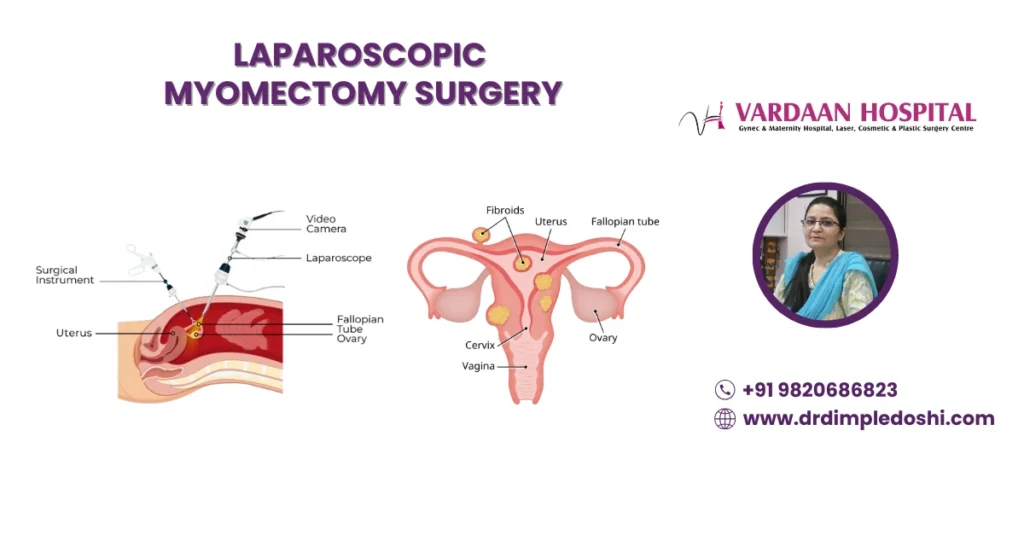
Are Fibroids Making Your Periods Unbearable or Affecting Your Fertility?
- Are you struggling with heavy menstrual bleeding, severe pelvic pain, or bloating that impacts your daily life?
- Have you been diagnosed with uterine fibroids but fear losing your uterus?
Many women face this dilemma—living in discomfort while worrying about fertility and avoiding major surgery.
Ignoring fibroids can lead to worsening symptoms, anemia, or complications that affect quality of life and reproductive health. For women planning pregnancy, fibroids can cause miscarriages or infertility—adding emotional stress to physical pain.
Solution:
Laparoscopic Myomectomy is a uterus-preserving, minimally invasive surgery that removes fibroids through tiny incisions. This advanced approach offers less pain, minimal scarring, faster recovery, and improved fertility outcomes compared to open surgery.
At Vardaan Hospital, Dr. Dimple Doshi uses cutting-edge 3D laparoscopic technology for safe, precise, and fertility-friendly fibroid removal.
Global & Indian Statistics
- Over 70% of women globally develop fibroids by age 50.
- In India, fibroids are a leading cause of hysterectomy in women aged 30–45.
- Laparoscopic myomectomy offers faster recovery, less blood loss, and better reproductive outcomes than open surgery.
- Studies confirm significant fertility improvement after laparoscopic fibroid removal.
What Is Laparoscopic Myomectomy and Why Is It Done?
Laparoscopic myomectomy, also called minimally invasive fibroid removal or keyhole fibroid surgery, is a procedure that removes uterine fibroids while preserving the uterus. It ensures faster recovery, minimal scars, and fertility preservation.
- Performed through small keyhole incisions using advanced laparoscopy
- Removes fibroids causing pain, heavy menstrual bleeding, or infertility
- Preserves the uterus, making it ideal for women planning future pregnancies
Synonyms: Laparoscopic fibroid removal, keyhole myomectomy, minimally invasive myomectomy, uterus-preserving fibroid surgery.
When Do You Really Need Laparoscopic Myomectomy Surgery?
You need myomectomy when fibroids severely impact quality of life or cause fertility issues unresponsive to medication.
- Persistent heavy menstrual bleeding
- Enlarged abdomen due to large fibroids
- Recurrent miscarriages or infertility
What Are the Common Indications for Laparoscopic Myomectomy?
Myomectomy is indicated for women with symptomatic fibroids causing pain, bleeding, or reproductive challenges.
- Menorrhagia (heavy bleeding)
- Pelvic pain and pressure symptoms
- Fibroid-related infertility or miscarriages
- Rapidly growing fibroids or very large fibroids
Can All Fibroids Be Treated with Laparoscopic Myomectomy?
No. This approach is best for small to medium fibroids (under 8–10 cm).
- Ideal for subserosal or intramural fibroids
- Not suitable for very large or numerous fibroids
What Are the Key Health Benefits of Laparoscopic Myomectomy?
Laparoscopic myomectomy offers uterus-preserving treatment with less pain, faster recovery, and improved fertility outcomes.
- Minimally invasive with tiny incisions
- Short hospital stay (often 24 hrs)
- Faster return to normal activities
- Less blood loss compared to open surgery
What Happens During Your First Consultation?
Your gynecologist reviews your symptoms, performs an exam, and recommends imaging tests to decide the best approach for fibroid removal.
- Detailed medical history
- Pelvic ultrasound or MRI
- Blood tests for anemia and hormones
What Are the Pre-Operative Instructions?
Follow your doctor’s guidance for smooth surgery and recovery.
- Avoid blood thinners 1 week prior
- Fasting 6–8 hours before surgery
- Bowel cleansing night before
- Continue essential medicines (thyroid, diabetes, BP)
How Is the Laparoscopic Myomectomy Procedure Performed?
The surgery is performed under anesthesia using advanced instruments to remove fibroids through tiny incisions.
- General anesthesia for comfort
- Small incisions made near the navel
- Laparoscope inserted for clear visualization
- Fibroids removed with specialized instruments
- Incisions closed with dissolvable sutures
What Are the Post-Operative Care Guidelines?
Follow these tips to heal quickly and avoid complications after your myomectomy.
- Take medications as prescribed
- Avoid strenuous activity for 3 weeks
- Keep incision clean and dry
- Start light walking within 24 hrs to improve circulation
What Is the Recovery Timeline After Myomectomy?
Most women return to light activity in 1 week, with full recovery in 2–4 weeks depending on the complexity of surgery.
- Daycare or 24-hour hospital stay
- Resume work in 7–10 days
- Full healing in 4–6 weeks
What Results Can You Expect After Surgery?
You can expect relief from heavy bleeding, pelvic discomfort, and improved fertility after a successful laparoscopic myomectomy.
- Better menstrual control
- Reduced pain and pressure symptoms
- Improved chances of conception
What Risks and Complications Should You Know?
Though rare, complications include infection, bleeding, adhesion formation, or organ injury. An experienced surgeon minimizes these risks.
- Infection or bleeding
- Adhesions in pelvic organs
- Anesthesia-related complications
- Rare hysterectomy for uncontrollable bleeding
Who Is the Best Gynecologist for Laparoscopic Myomectomy in Mumbai?
Dr. Dimple Doshi at Vardaan Hospital is a leading expert in laparoscopic fibroid removal with 27+ years of experience and advanced surgical expertise.
What Is the Cost of Laparoscopic Myomectomy in Mumbai?
The cost varies based on hospital facilities and room selection.
- General Ward: ₹50,000
- Semi-Special: ₹68,000 – ₹75,000
- Deluxe Room: ₹1.2 Lakhs
- Super Deluxe: ₹1.5 Lakhs
- Suite: ₹2 Lakhs
Medical Codes Apply for Laparoscopic Myomectomy
ICD-10 Codes for Uterine Fibroids (Myomas)
| ICD-10 Code | Description |
|---|---|
| D25.0 | Submucous leiomyoma of uterus |
| D25.1 | Intramural leiomyoma of uterus |
| D25.2 | Subserosal leiomyoma of uterus |
| D25.9 | Leiomyoma of uterus, unspecified |
CPT Codes for Laparoscopic Myomectomy
| CPT Code | Description |
|---|---|
| 58545 | Laparoscopy, surgical; myomectomy, excision of fibroid(s), 1–4 intramural myomas, total weight ≤ 250 grams and/or removal of surface myomas |
| 58546 | Laparoscopy, surgical; myomectomy, excision of fibroid(s), 5 or more intramural myomas and/or total weight > 250 grams |
| 49320 | Laparoscopy, diagnostic (used prior to definitive surgical intervention) |
| 58140 | Myomectomy, excision of fibroid tumors of uterus, abdominal approach (open procedure, if laparoscopy converted) |
FAQs on Laparoscopic Myomectomy Surgery
Q1. Can fibroids be removed during laparoscopy?
Ans: Yes, laparoscopic myomectomy is a minimally invasive method to remove fibroids while preserving the uterus.
Q2. Can a 7 cm fibroid be removed laparoscopically?
Ans: Yes, fibroids up to 8–10 cm can often be removed laparoscopically, depending on location and surgeon expertise.
Q3. Can I get pregnant after a laparoscopic myomectomy?
Ans: Yes, pregnancy is possible after recovery; most doctors recommend waiting 3–6 months before conceiving.
Q4. Do fibroids grow back after laparoscopic removal?
Ans: Fibroids can recur, especially in women with hormonal imbalance, but recurrence rates are relatively low.
Q5. What is the size limit for laparoscopic myomectomy?
Ans: Typically, fibroids up to 10–12 cm are suitable, but the decision depends on number, location, and surgical skill.
Q6. Which surgery is best for uterus fibroid removal?
Ans: Laparoscopic myomectomy is preferred for faster recovery, minimal scarring, and uterus preservation.
Q7. What to avoid after laparoscopic myomectomy?
Ans: Avoid heavy lifting, strenuous activity, and sexual intercourse for at least 4–6 weeks post-surgery.
Q8. What is the cost of laparoscopic fibroid removal?
Ans: Costs in Mumbai typically range between ₹80,000 to ₹1,50,000, depending on hospital and case complexity.
Q9. How safe is laparoscopic myomectomy?
Ans: It is generally safe, with lower blood loss and faster healing compared to open surgery, when performed by an expert.
Q10. Which is better, laparoscopy or open surgery for fibroids?
Ans: Laparoscopy offers quicker recovery and less pain, while open surgery may be needed for very large or multiple fibroids.
Q11. What is the newest way to remove fibroids?
Ans: Advanced laparoscopic and robotic-assisted surgeries are among the latest, offering precision and minimal invasiveness.
Q12. Is a myomectomy like a C-section?
Ans: No, a myomectomy removes fibroids, while a C-section delivers a baby. However, both involve uterine incisions.
Q13. How much does a 7 cm fibroid weigh?
Ans: A 7 cm fibroid typically weighs between 200–300 grams, depending on density and water content.
Q14. Is laparoscopic fibroid removal painful?
Ans: Mild discomfort is common, but pain is usually manageable and far less than open surgery.
Q15. Can the uterus be removed by laparoscopy if needed?
Ans: Yes, if fibroids are very large or symptomatic, a laparoscopic hysterectomy may be recommended.
