Introduction
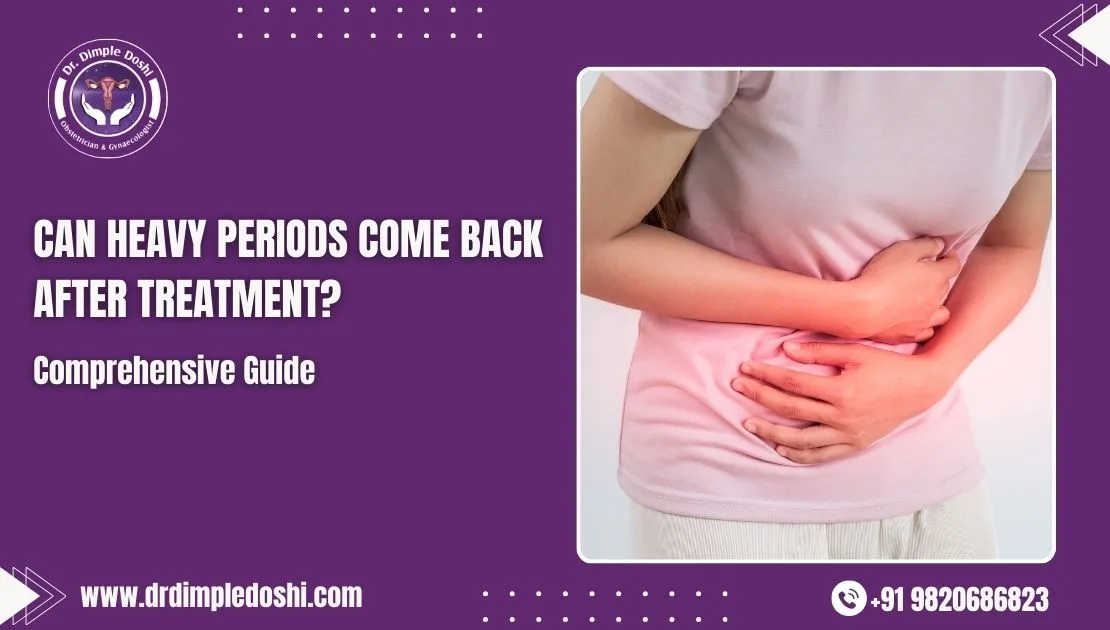
Many women feel relieved once heavy periods improve after treatment—only to feel anxious and confused if the bleeding returns months or years later. In my clinical experience, this situation is common and understandably worrying. The good news is that recurrence usually has a clear, manageable reason. This guide explains why heavy periods can return, when to worry, and how we approach it safely and systematically.
Tired of heavy, exhausting periods? Get expert treatment options from Dr. Dimple Doshi.
Can heavy periods return after treatment?
Yes. Heavy periods can come back because many treatments control bleeding but don’t always remove the root cause, or the condition may recur or progress over time.
Detailed explanation
Heavy menstrual bleeding is often managed rather than permanently “cured,” especially when the uterus or hormones are involved. Over time, changes inside the body can reactivate symptoms.
In my clinical experience, recurrence does not mean treatment failed—it means your body needs reassessment and a step-up or adjustment in care.
What are the most common reasons heavy periods return?
Heavy periods most often return when the underlying cause persists, hormones fluctuate again, treatment effects wear off, or an IUD-related issue develops.
1) The underlying cause is still there (or has grown)
- Fibroids enlarging again
- Adenomyosis progressing
- Endometrial polyps recurring
2) Hormonal imbalance returns
- PCOS / anovulation (irregular, heavy bleeding)
- Perimenopause (cycle instability)
- Thyroid dysfunction
3) Treatment effect wears off or is stopped
- Tablets or injections work only while used
- Bleeding may return after stopping medication
4) IUD-related reasons (LNG-IUS)
- Expulsion, displacement, or improper position
- Device effect reduces over time and needs reassessment
Dr. Dimple Doshi’s Tip:
If bleeding improves initially and then slowly worsens again, it often signals progression of the cause, not something dangerous—but it should never be ignored.
Why is endometrial hyperplasia especially important to rule out?
Endometrial hyperplasia can cause heavy or prolonged bleeding and may persist or recur if the hormonal trigger continues or follow-up is delayed.
What is happening inside the uterus?
Endometrial hyperplasia is a thickening of the uterine lining due to estrogen dominance. It commonly causes:
- Heavy bleeding
- Prolonged periods
- Spotting in between cycles
Why it can persist or recur
- The hormonal driver continues (PCOS, obesity, perimenopause, unopposed estrogen)
- Progesterone therapy is not continued or optimized
- Follow-up sampling is delayed when indicated
Clinical point:
If bleeding returns after age 40–45, or becomes newly heavy, hyperplasia must be actively ruled out—it should never be assumed to be “just hormonal.”
When should heavy periods after treatment worry you?
Seek evaluation promptly if bleeding is severe, prolonged, associated with anemia symptoms, occurs after 45, or recurs after prior hyperplasia treatment.
Red flags I advise women not to ignore
- Soaking pads every 1–2 hours or passing large clots
- Bleeding between periods or after intercourse
- Bleeding lasting more than 7 days repeatedly
- Fatigue, breathlessness, or palpitations (possible anemia)
- Age over 45 with new or worsening bleeding
- Recurrence after treatment for endometrial hyperplasia without follow-up
What tests are needed if heavy periods return?
A focused evaluation looks for anemia, uterine causes, hormonal issues, and endometrial changes—guided by age and symptoms.
What I typically recommend
- CBC + ferritin to assess iron deficiency
- Pelvic ultrasound to check fibroids, polyps, adenomyosis, and endometrial thickness
- TSH for thyroid function
- Endometrial biopsy when indicated (especially over 45, with risk factors, or persistent/recurrent AUB)
Dr. Dimple Doshi’s Tip:
Timely evaluation often prevents escalation. Most women do not need emergency or major surgery when assessed early.
How is treatment planned if heavy periods return?
Treatment follows a step-up approach—correct anemia, adjust medical therapy, address the cause, and reserve surgery only when clearly indicated.
Step-wise management
- Correct anemia and rebuild iron stores
- Restart or adjust medical therapy (tranexamic acid, NSAIDs, progestins as appropriate)
- Consider LNG-IUS if suitable
- Treat the underlying cause (polyp or fibroid removal, adenomyosis-specific planning)
- Surgery only when indicated—and when required, it is performed with precision 3D laparoscopy (Karl Storz Rubina system) for faster recovery and uterine-preserving outcomes whenever possible
FAQs
Q1. Can heavy periods return even after D&C?
Ans. Yes. D&C is often temporary unless the underlying cause is identified and treated.
Q2. Can endometrial hyperplasia come back after treatment?
Ans. Yes. Recurrence is possible if risk factors continue, which is why follow-up is essential.
Still have questions about heavy bleeding, periods, or anemia? Get clarity from Dr. Dimple Doshi’s expert team.
Conclusion
Heavy periods returning after treatment are common and manageable. With the right evaluation, most women regain control without fear or unnecessary procedures. Early review, especially after 40, protects both health and peace of mind. If your symptoms have returned, a calm, personalized assessment can make all the difference.