
Understanding Pelvic Inflammatory Disease (PID): Symptoms, Causes and Treatment
Introduction
Pelvic Inflammatory Disease, commonly known as PID, is an infection and inflammation of the female reproductive organs—mainly the uterus, fallopian tubes, ovaries, and pelvic lining. While PID is completely treatable when diagnosed early, neglecting symptoms can lead to long-term complications like infertility and chronic pelvic pain.
In my practice, I often see women ignore early warning signs, assuming the pain or discharge is “normal.” This delay is what causes avoidable damage.
What exactly is Pelvic Inflammatory Disease?
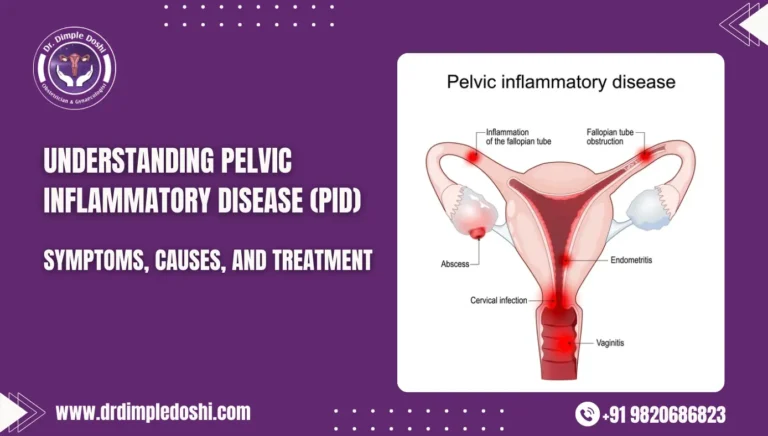
PID develops when infection-causing organisms—most commonly bacteria—ascend from the vagina and cervix into the pelvis, affecting internal reproductive organs. The condition may start silently but can progress rapidly if untreated.
How does PID develop inside the body?
The infection usually progresses step by step:
Entry of bacteria into the vagina and cervix
This may involve:Overgrowth of normal vaginal bacteria
Sexually transmitted infections like chlamydia or gonorrhea
Breakdown of the cervical defense barrier
The cervix normally has a mucus plug that blocks infection. This barrier can break due to:Sexually transmitted infections
Childbirth
Copper-T insertion
Abortions, D&C procedures
Vaginal douching
Spread to the uterus (endometritis)
Leading to:Pelvic pain
Irregular bleeding
Abnormal discharge
Involvement of fallopian tubes (salpingitis)
Causing:Swelling
Scarring
Adhesions that block the tubes
Spread to ovaries and surrounding tissues
Resulting in:Oophoritis
Tubo-ovarian abscess or adnexal mass
Involvement of pelvic lining (pelvic peritoneum)
This may lead to:Fluid collection in pelvis
Intestinal adhesions
“Frozen pelvis”
In severe cases, infection may even involve the intestines, increasing the risk of future bowel obstruction.
Dr. Dimple Doshi’s Tip:
PID does not damage fertility overnight—it causes slow, silent scarring. Early treatment can completely prevent this.
What are the risk factors for PID?
Certain situations significantly increase the risk of developing PID:
- Multiple sexual partners
- Unprotected sexual intercourse
- History of sexually transmitted infections
- Previous episode of PID
- Incomplete treatment of earlier infection
- Untreated infected sexual partner
- Copper-T insertion or recent childbirth
- Abortions or uterine procedures (D&C)
- Vaginal douching or excessive internal cleaning
- Reduced immunity (HIV, tuberculosis, long-term illness)
What symptoms should raise suspicion for PID?
Symptoms may be mild initially but can worsen over time.
Common symptoms include:
- Lower abdominal or pelvic pain
- Pain during sexual intercourse
- Foul-smelling vaginal discharge
- Fever with chills
- Irregular periods or spotting
- Heavy menstrual bleeding
- Painful urination
- Nausea or vomiting
- Persistent lower back pain
In my clinical experience, women with mild symptoms often delay treatment—this is where long-term damage begins.
What complications can PID cause if untreated?
Untreated or recurrent PID can lead to serious and sometimes irreversible problems:
- Chronic pelvic pain
- Infertility due to tubal blockage
- Ectopic pregnancy (pregnancy outside the uterus)
- Hydrosalpinx (fluid-filled tubes)
- Tubo-ovarian abscess
- Intestinal adhesions and bowel obstruction
- Fitz-Hugh-Curtis syndrome (liver capsule inflammation)
How is PID diagnosed?
PID is diagnosed based on a combination of:
- Detailed medical history and symptoms
- Pelvic examination
- Vaginal and cervical swabs
- Blood tests to assess infection
- Pelvic ultrasonography to look for abscesses, fluid, or masses
In unclear or chronic cases, diagnostic laparoscopy may be advised to directly visualize pelvic organs.
How is Pelvic Inflammatory Disease treated?
PID treatment must be early, aggressive, and complete.
Antibiotics such as:
Ceftriaxone / Cefotaxime
Azithromycin
Doxycycline
Metronidazole
Treatment usually continues for 2–3 weeks
Hospitalization may be required in severe cases with high fever or abscess
Sexual abstinence until treatment completion
Partner treatment is essential to prevent reinfection
Dr. Dimple Doshi’s Tip:
Stopping antibiotics midway or ignoring partner treatment is the most common cause of recurrent PID.
How can PID be prevented?
PID is largely preventable with simple but consistent measures:
- Practice safe sex
- Use condoms regularly
- Avoid multiple sexual partners
- Do not indulge in vaginal douching
- Seek prompt treatment for vaginal discharge or infections
- Get regular STI screening if at risk
Conclusion
Pelvic Inflammatory Disease is a serious but preventable and treatable condition. The key lies in early recognition, complete treatment, and prevention of recurrence. Ignoring symptoms or delaying care can cost a woman her fertility and long-term comfort.
At Vardaan Hospital, Goregaon West, Mumbai, I focus on early diagnosis, evidence-based treatment, and patient education so that women do not suffer lifelong consequences from a condition that is entirely manageable when addressed in time.
Your reproductive health deserves attention—never ignore persistent pelvic symptoms.
