Introduction
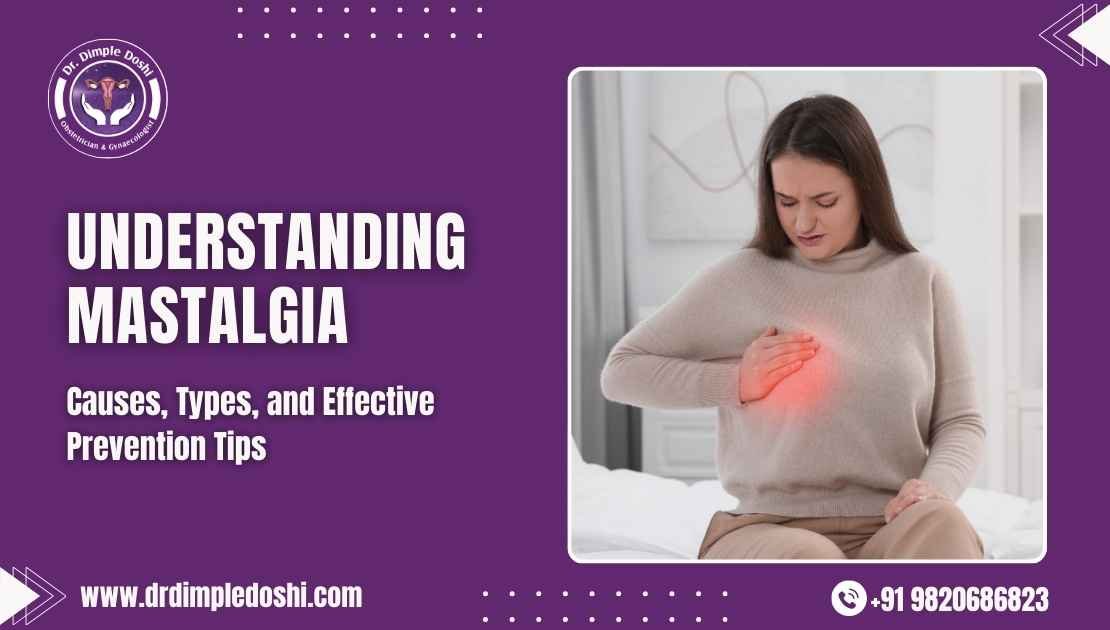
Breast pain, medically known as mastalgia, is a very common concern I hear in my OPD. Nearly 8 out of 10 women experience breast pain at some point in their lives. This pain can range from mild heaviness or tenderness to sharp, stabbing, or burning sensations. While mastalgia is rarely associated with breast cancer, it can cause significant anxiety and discomfort. Understanding why it happens and how to manage it can greatly improve your daily comfort and peace of mind.
What is mastalgia?
Mastalgia refers to pain or discomfort in one or both breasts. It can occur at any age and may or may not be related to the menstrual cycle. In most cases, breast pain is benign and manageable with simple lifestyle measures.
In my clinical experience, reassurance and correct guidance itself reduces nearly half the anxiety related to breast pain.
What are the types of mastalgia?
Cyclic mastalgia
This is the most common type of breast pain and is linked to hormonal changes during the menstrual cycle.
- Occurs due to fluctuations in estrogen and progesterone
- Usually affects both breasts
- Pain increases in the second half of the cycle
- Improves or disappears after menstruation
Non-cyclic mastalgia
This type is not related to periods and can occur at any time.
- May affect only one breast
- Pain can be sharp, burning, or localized
- Seen in women of any age
- Often related to breast cysts, infections, muscle strain, or trauma
What are the common causes of breast pain?
Several factors can contribute to mastalgia:
- Hormonal fluctuations, especially before periods
- Excess caffeine intake (coffee, tea, cola, energy drinks)
- High-fat, high-sugar, and high-salt diet
- Poorly fitted or non-supportive bras
- Fibrocystic breast changes
- Breast infections (mastitis)
- Emotional stress and anxiety
- Certain medications and supplements
Dr. Dimple Doshi’s Tip:
Many women notice a clear improvement in breast pain just by reducing caffeine and wearing the right bra.
How can mastalgia be prevented?
While mastalgia cannot always be completely avoided, its severity and frequency can be significantly reduced with simple lifestyle changes.
- Maintain a healthy body weight
- Eat a balanced diet rich in fruits, vegetables, and lean proteins
- Reduce refined sugar and excess salt
- Avoid processed and junk foods
- Limit caffeine intake
- Stop smoking and limit alcohol consumption
- Wear a well-fitted, supportive bra, especially during exercise
- Exercise regularly to maintain hormonal balance
- Practice stress-relieving techniques like yoga, meditation, or deep breathing
- Perform monthly breast self-examination to stay breast-aware
How is mastalgia managed?
In most women, breast pain settles with reassurance and lifestyle correction. If needed, additional measures can help.
Simple pain relievers like paracetamol or ibuprofen (when required)
Nutritional supplements such as:
– Vitamin B6
– Evening primrose oil
– Omega-3 fatty acidsSupportive bras to reduce breast movement and strain
In selected severe cases, medications may be prescribed under medical supervision
If breast pain is associated with lumps, nipple discharge, redness, fever, or persistent one-sided pain, further evaluation is necessary.
When should you see a doctor?
You should consult a gynecologist if:
- Breast pain persists for several months
- Pain is severe or worsening
- There is a new lump or skin change
- Pain is localized to one area
- There is nipple discharge or infection
Early evaluation helps rule out rare but serious causes and provides reassurance.
Conclusion
Mastalgia is extremely common and, in most cases, harmless and treatable. Understanding the pattern of pain, identifying triggers, and making small lifestyle changes can bring significant relief. Persistent breast pain should never be ignored, but it should also not create unnecessary fear.
At Vardaan Hospital, Goregaon West, Mumbai, I focus on patient education, early evaluation, and personalized care for breast-related concerns. Remember—prevention, awareness, and timely consultation are the keys to long-term breast health.