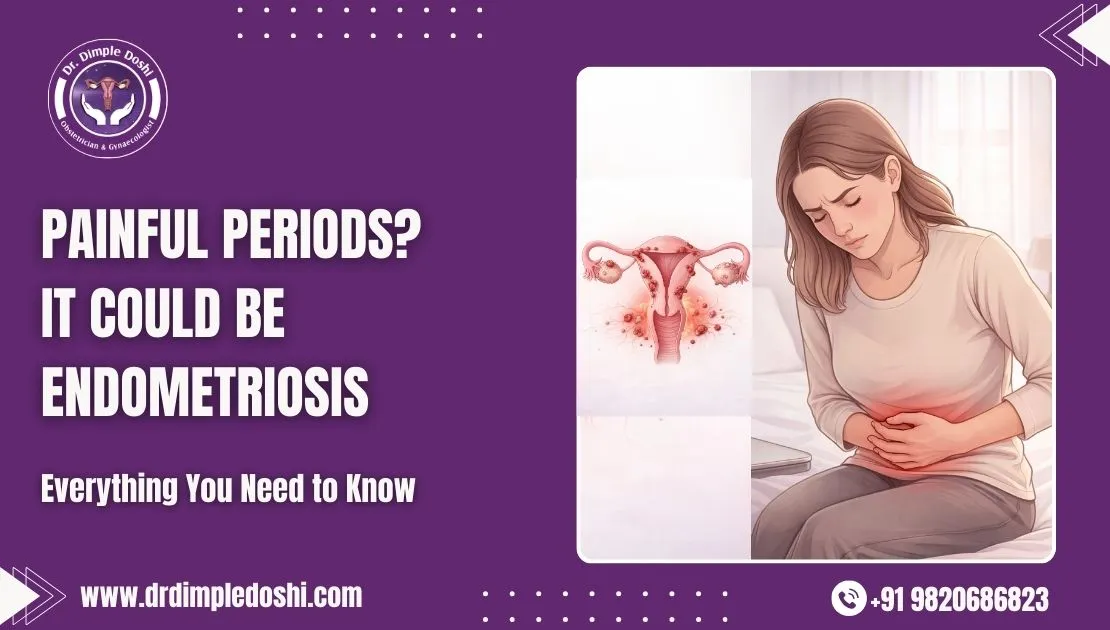
If your periods are so painful that you have to cancel plans, miss work, lie down in bed, or depend on repeated painkillers, this may be more than “normal cramps.” Endometriosis is one important cause of period-related pain that affects daily activities and quality of life. NICE specifically advises clinicians to suspect endometriosis when dysmenorrhea is severe enough to disrupt routine life. (NICE)
Endometriosis happens when tissue similar to the uterine lining grows outside the uterus. It is commonly linked with painful periods, chronic pelvic pain, pain during sex, pain with bowel movements or urination, and subfertility. (ACOG)
When Period Pain Is No Longer “Just Period Pain”
Some menstrual cramps are common, but they should still be tolerable. When pain becomes intense enough to interfere with school, work, sleep, exercise, travel, or your normal responsibilities, it deserves proper evaluation. Mayo Clinic notes that endometriosis pain may start before the period begins and continue for days into the cycle. (Mayo Clinic)
A key clinical clue is this: normal cramps should not repeatedly stop your life. If they do, the pain should not be normalized. (NICE)
How Endometriosis-Related Pain Commonly Feels
Pain from endometriosis may present as:
- severe cramping during periods
- pelvic pain even between periods
- lower back or lower abdominal pain
- pain during or after intercourse
- pain during bowel movements or urination, especially around menstruation
- heavy bleeding or bleeding between periods in some women (Mayo Clinic)
Not every woman has every symptom. Some mainly have disabling period pain. Others notice pain plus fertility difficulty. (NICE)
Why This Symptom Is Often Missed
Many women are told that severe period pain is “normal,” especially if they have had it for years. That is one reason endometriosis is often diagnosed late. NICE updated its guidance in 2024 to improve earlier recognition and reduce delays in diagnosis. (NICE)
If pain is worsening with time, lasting beyond the first day or two of bleeding, or spreading beyond typical cramps, an underlying cause such as endometriosis should be considered. (ACOG)
When You Should Suspect Endometriosis
You should consider evaluation for endometriosis if your painful periods:
- stop you from doing daily activities
- are getting worse over time
- are associated with chronic pelvic pain
- are linked with deep pain during or after sex
- are accompanied by painful bowel motions or urination during periods
- are associated with trouble conceiving (NICE)
These symptoms do not confirm endometriosis by themselves, but they are strong reasons not to ignore the problem. (NICE)
How Endometriosis Is Evaluated
A gynecologist may suspect endometriosis based on your history, symptom pattern, and examination. Ultrasound may help identify certain forms, such as endometriomas, but a normal scan does not rule out all disease. NICE recommends initial investigations and treatment to be started in parallel when endometriosis is suspected. (NICE)
Can It Be Treated?
Yes. Initial management may include pain relief such as NSAIDs and hormonal treatment like the combined pill or progestogens. In selected patients, especially when symptoms are severe, persistent, or fertility is a concern, laparoscopic surgery may be considered for diagnosis and treatment. (NICE)
When surgery is needed, advanced laparoscopic management allows precise evaluation and treatment of endometriosis. In experienced hands, 3D laparoscopy can offer better depth perception and precision during complex pelvic dissection.
Frequently Asked Questions
Q1. Are painful periods always due to endometriosis?
Ans. No. Painful periods can have many causes, but severe pain that affects daily life is a reason to evaluate for conditions such as endometriosis. (ACOG)
Q2. Can I have endometriosis if my ultrasound is normal?
Ans. Yes. Some forms of endometriosis may not be seen clearly on routine imaging. (NICE)
Q3. Is heavy bleeding necessary to diagnose endometriosis?
Ans. No. Some women have heavy bleeding, but many mainly present with pain. (Mayo Clinic)
Q4. When should I see a gynecologist?
Ans. If your period pain is severe, worsening, affecting work or sleep, or linked with pelvic pain, painful sex, bowel/bladder pain, or infertility, you should seek medical evaluation. (NICE)
Conclusion
If your painful periods are stopping your routine, please do not dismiss them as something you simply have to “bear.” Period pain that disrupts your life is a valid medical symptom, and endometriosis is one important possible cause. Early evaluation can help you find relief, protect fertility, and regain control over your daily life. (NICE)