Dr. Dimple Doshi (MBBS, MD, DGO)
Gynecologist & Laparoscopic Surgeon
27+ years’ experience
20,000+ surgeries completed
Many women tell me that during heavy periods they feel weak, breathless, bloated, and mentally exhausted, making exercise feel overwhelming. It’s natural to worry whether movement will worsen bleeding or dizziness. In this guide, I’ll offer clear, safe, doctor-led guidance on how to move your body during heavy menstrual bleeding—without strain or fear.
Heavy bleeding lowers energy and iron levels, making intense exercise unsafe while gentle movement remains beneficial.
When your flow is heavy, your body may be losing more blood and iron than usual
This can lead to:
The goal during heavy days is not performance—it is comfort, circulation, and safety
Dr. Dimple Doshi’s Tip:
In my clinical experience, women who shift their focus from “workout intensity” to gentle movement feel more comfortable and recover better during heavy-flow days.
Low-impact, gentle exercises can reduce cramps, stiffness, and low mood without increasing bleeding.
Yes, easy walking supports circulation and mood when done at a comfortable pace.
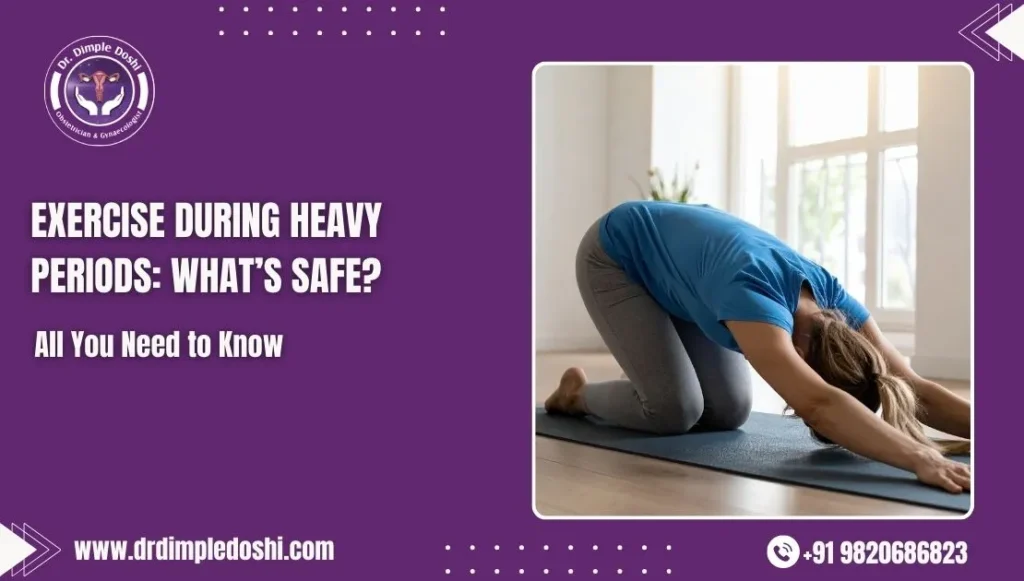
Slow, restorative yoga helps relieve cramps and back discomfort.
Light stretching reduces pelvic heaviness and back pain.
Light strength work is safe only if you feel stable and not dizzy.
Avoid training to failure and keep sessions short
High-intensity workouts can worsen weakness, dizziness, and cramps during heavy bleeding.
Anything that makes you feel shaky, faint, or suddenly exhausted
Certain symptoms signal that exercise is no longer safe and should be stopped immediately.
These symptoms require prompt medical attention.
Dr. Dimple Doshi’s Tip:
Please don’t push through warning signs. Resting early and seeking advice prevents complications like anemia and extreme fatigue.
Simple precautions make movement safer and more comfortable.
Persistent heavy bleeding needs evaluation to identify and treat the cause safely.
At Vardaan Hospital, Goregaon West, evaluation typically includes a detailed history, examination, pelvic ultrasound, and targeted blood tests. Treatment is personalized and may be medical or minimally invasive, depending on diagnosis and fertility goals.
Ans. Gentle activity usually does not cause heavy bleeding. Overexertion may worsen fatigue or dizziness, and flow may feel temporarily heavier in some women.
Ans. If hemoglobin is low or you feel breathless or dizzy, stick to walking, stretching, and restorative yoga until levels improve.
Ans. A 10–20 minute easy walk with gentle stretching is usually ideal.
Ans. If you experience faintness, palpitations, severe weakness, or very heavy bleeding, rest and seek medical guidance.
Heavy menstrual bleeding does not mean you must stop all movement—but it does mean listening to your body carefully. Gentle exercise can support comfort and mood, while intense workouts should be avoided on heavy-flow days. With timely evaluation and personalized care, most women regain strength, confidence, and balance. Early guidance always leads to safer, better outcomes.