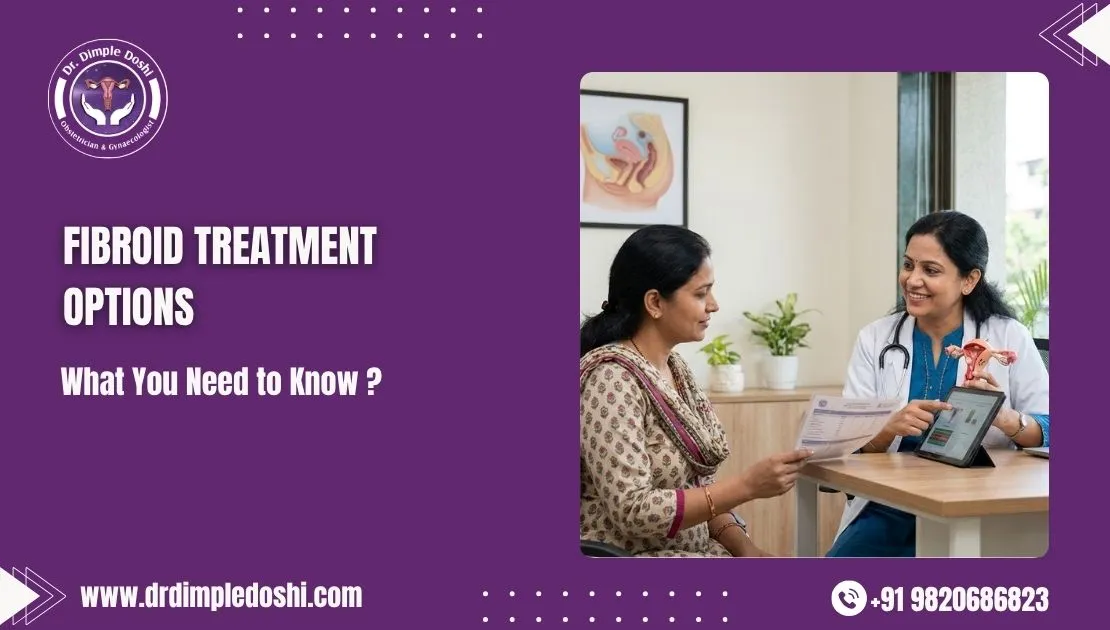
Key Takeaways: Not every fibroid needs treatment. Options range from watchful waiting and medicines (hormonal or non-hormonal) to uterus-preserving myomectomy, hysterectomy for those who’ve completed their family, and minimally invasive keyhole surgery. The right choice depends on symptoms, fibroid size and location, and fertility plans. Outcomes vary by individual.
Do all fibroids need treatment?
No — many fibroids need only monitoring; treatment is considered when they cause heavy bleeding, pain, pressure symptoms or fertility concerns.
A conservative, step-by-step approach is usual:
- Watchful waiting for small, symptom-free fibroids.
- Medicines to control bleeding and pain.
- Uterus-preserving surgery if fertility matters.
- Definitive surgery when the family is complete.
Treatment is about your symptoms and goals, not the fibroid alone — see the fibroids resource.
What are the non-surgical treatment options?
Non-surgical options include watchful waiting, medicines to reduce bleeding and pain, a hormonal IUD, and — in selected centres — uterine artery embolisation or HIFU.
- Watchful waiting with periodic scans.
- Medicines — tranexamic acid, NSAIDs, hormonal options (see below).
- Hormonal IUD (Mirena) for heavy periods with small fibroids.
- Uterine artery embolisation (UAE) — shrinks fibroids by cutting their blood supply.
- HIFU — focused-ultrasound ablation in selected cases.
Medical treatment mainly controls symptoms; it generally does not remove fibroids.
Hormonal vs non-hormonal medicines — what's the difference?
Non-hormonal medicines like tranexamic acid and NSAIDs reduce bleeding and pain during periods; hormonal options work by changing the hormonal cycle that drives fibroids.
| Non-hormonal | Hormonal | |
|---|---|---|
| Examples | Tranexamic acid, NSAIDs | Combined pill, progestins, hormonal IUD, GnRH agonists/antagonists |
| How they help | Reduce bleeding/pain during periods | Lighten periods; some temporarily shrink fibroids |
| Suited for | Wanting a non-hormonal option | Heavy bleeding, or shrinking fibroids before surgery |
| Note | Don’t shrink fibroids | Effects often reverse when stopped |
Your choice depends on your symptoms, whether you’re trying to conceive, and how you respond — it’s an individual decision with your doctor.
Myomectomy vs hysterectomy — which is right?
Myomectomy removes fibroids while keeping the uterus (preserving fertility); hysterectomy removes the uterus and is a definitive option for those who’ve completed their family.
| Myomectomy | Hysterectomy | |
|---|---|---|
| Uterus | Preserved | Removed |
| Fertility | Kept | Not possible after |
| Recurrence | New fibroids can form | No fibroid recurrence |
| Suited for | Wanting future pregnancy, or to keep the uterus | Completed family, or definitive treatment |
Neither is “better” in the abstract — the right operation depends on your fibroids, symptoms and whether you want to keep your uterus.
What is minimally invasive fibroid surgery?
Minimally invasive fibroid surgery uses keyhole (laparoscopic/robotic) or hysteroscopic techniques — smaller cuts, less pain and quicker recovery than open surgery.
- Laparoscopic / 3D laparoscopic myomectomy — keyhole removal, uterus preserved.
- Robotic myomectomy — robot-assisted keyhole surgery.
- Hysteroscopic myomectomy — removes cavity (submucosal) fibroids through the cervix, no external cut.
- Open myomectomy — for very large or numerous fibroids.
Keyhole approaches usually mean a shorter stay and faster return to routine, but aren’t suitable for every fibroid — your surgeon advises what’s safest. Outcomes vary by individual.
(FAQS) Frequently Asked Question
Q1. Can fibroids be treated without surgery?
Ans. Yes, often. Many women manage fibroids with monitoring or medicines. Surgery is considered when symptoms persist or fertility is affected.
Q2. Which fibroid surgery preserves fertility?
Ans. Myomectomy removes fibroids while keeping the uterus, so it’s the uterus-preserving option for women who may want to conceive.
Q3. Is keyhole fibroid surgery better than open surgery?
Ans. Keyhole surgery usually means smaller cuts and quicker recovery, but the right approach depends on the size, number and position of the fibroids. It isn’t suitable for everyone.
Q4. Do medicines make fibroids disappear?
Ans. Medicines mainly control symptoms like bleeding and pain, and some hormonal options temporarily shrink fibroids. They generally don’t remove them, and effects often reverse when stopped.
Q5. Fibroid ke liye operation zaroori hai kya? (Is surgery necessary for fibroids?)
Ans. Not always. Many fibroids just need monitoring or medicines. Surgery is advised for heavy bleeding, pressure symptoms, large fibroids, or fertility concerns.
Weighing your fibroid options? A consultation can match the right approach to you.
📅 Book a consultation with Dr. Dimple Doshi · Vardaan Hospital, Goregaon West, Mumbai