Dr. Dimple Doshi (MBBS, MD, DGO)
Lady Gynecologist & Laparoscopic Surgeon
27+ years’ experience
20,000+ surgeries completed
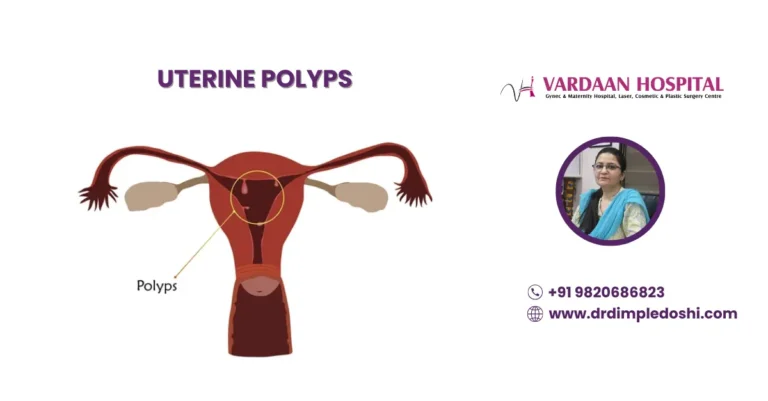
Uterine polyps are usually benign overgrowths of the uterine lining (endometrial polyps) that can cause irregular bleeding or affect fertility.
Uterine polyps — also called endometrial or mucosal polyps — are soft, usually benign (non-cancerous) growths of the lining of the uterus. They are hormone-sensitive, so they tend to grow in response to oestrogen. Many cause no trouble at all; others lead to irregular bleeding or affect fertility, and those are the ones worth treating.
Uterine polyps often cause heavy or irregular periods, spotting between cycles, bleeding after intercourse or menopause, and fertility problems.
Symptoms to notice:
Some polyps cause no symptoms and are found by chance on a scan. Any bleeding after menopause should always be checked.
Uterine polyps are linked to hormonal shifts, especially higher oestrogen — seen with PCOS, obesity, the menopause transition, or tamoxifen use.
Common contributors:
Because polyps are hormone-driven, managing related factors can help — though removal is usually needed when they cause symptoms.
Uterine polyps are diagnosed with a transvaginal ultrasound, saline sonography and hysteroscopy — which can confirm and remove them in one sitting.
Tests used:
Because hysteroscopy both finds and removes polyps, it’s central to their care.
Most uterine polyps are benign; only a small number are pre-cancerous or cancerous, which is why removed polyps are tested to be sure.
The reassuring context: the large majority of uterine polyps are benign. A small proportion — more so after menopause — can be pre-cancerous or cancerous, which is exactly why any removed polyp is sent for histopathology to confirm it’s benign. This careful, routine check is how a harmless polyp is told apart from one that needs more attention — so testing, not worry, is the sensible step.
Uterine polyps can affect fertility if they sit near the tubal openings or disturb implantation; removing them may improve the chance of conceiving.
How polyps can matter for fertility:
If you’re trying to conceive, a fertility assessment helps decide whether a polyp needs removing. Results vary and are discussed individually, not as a fixed promise.
Small, symptom-free polyps may be watched; hormonal medicines can ease symptoms, but hysteroscopic polypectomy is the main treatment.
Care is matched to your symptoms:
| Option | What it involves | Suited to |
|---|---|---|
| Watchful monitoring | Re-checking over time | Small, symptom-free polyps |
| Hormonal medicines | Temporary symptom relief | Easing bleeding while deciding on removal |
| Hysteroscopic polypectomy | Keyhole removal through the cervix, with the polyp tested afterwards | Symptomatic polyps, fertility concerns, or postmenopausal bleeding |
Hysteroscopic polypectomy is the main (gold-standard) treatment because it removes the polyp and provides a sample for testing. The procedure is explained next.
Hysteroscopic polypectomy removes the polyp through the cervix using a hysteroscope and fine instruments — a short day-care procedure.
What the procedure involves:
It’s a minimally invasive, day-care procedure — many women go home the same day.
Recovery after hysteroscopic polyp removal is quick — usually same-day discharge, mild cramps or spotting, and return to normal activities soon after.
What to expect:
Contact your doctor if you have heavy bleeding, fever, severe pain or foul-smelling discharge afterwards. Your histopathology result and any next steps are discussed at follow-up.
Hysteroscopic polyp removal in Mumbai costs about ₹30,000–45,000, plus small charges for biopsy or medicines; final cost is set after consultation.
Approximate costs at Vardaan Hospital:
| Item | Approximate cost (₹) |
|---|---|
| Hysteroscopic polypectomy | ~30,000 – 45,000 |
| Biopsy / histopathology | ~1,000 – 2,000 |
| Hormonal medicines | ~1,500 – 4,000 / month |
The exact figure depends on the polyp, procedure details and room category. At Vardaan Hospital, eligible patients may access cashless and reimbursement assistance, subject to insurance approval. Cost is a range and is finalised after consultation; outcomes vary by individual.
Dr. Dimple Doshi offers accurate diagnosis and minimally invasive polyp removal, with histopathology for peace of mind, at Vardaan Hospital, Goregaon West, Mumbai.
Full credentials are viewable on the About page.
Ans. Most uterine polyps are benign. A small proportion, especially after menopause, can be pre-cancerous, which is why removed polyps are always tested. Bleeding after menopause should always be checked promptly.
Ans. No. Small, symptom-free polyps may just be monitored, and some settle on their own. Removal is advised for bleeding symptoms, fertility concerns, or any postmenopausal bleeding.
Ans. It’s usually done under anaesthesia, so you won’t feel pain during it. Afterwards, mild cramps or light spotting are common and settle quickly. Most women go home the same day.
Ans. They can, especially if positioned near the tubal openings or where an embryo implants. Removing a polyp may improve the chance of conceiving, and polypectomy is often advised before IVF.
Ans. Often yes — many women find their bleeding improves after the polyp is removed. Your doctor will review your cycles at follow-up, along with the histopathology result.
Ans. Sometimes polyps can recur, particularly with ongoing hormonal factors like PCOS or obesity. Managing those factors and follow-up help reduce the chance.
Ans. Most women resume normal activities soon after this day-care procedure, with only mild cramps or spotting. Your doctor will advise on anything to avoid briefly.
Ans. The removed polyp is sent for histopathology, and your result is usually discussed at your follow-up visit, along with any next steps.