Fibroid treatment is often the turning point you’ve been waiting for—less bleeding, less pressure, better energy, and a more “normal” life again. But once the procedure is done, most women ask the same question:
“When can I start exercising—and what is safe?”
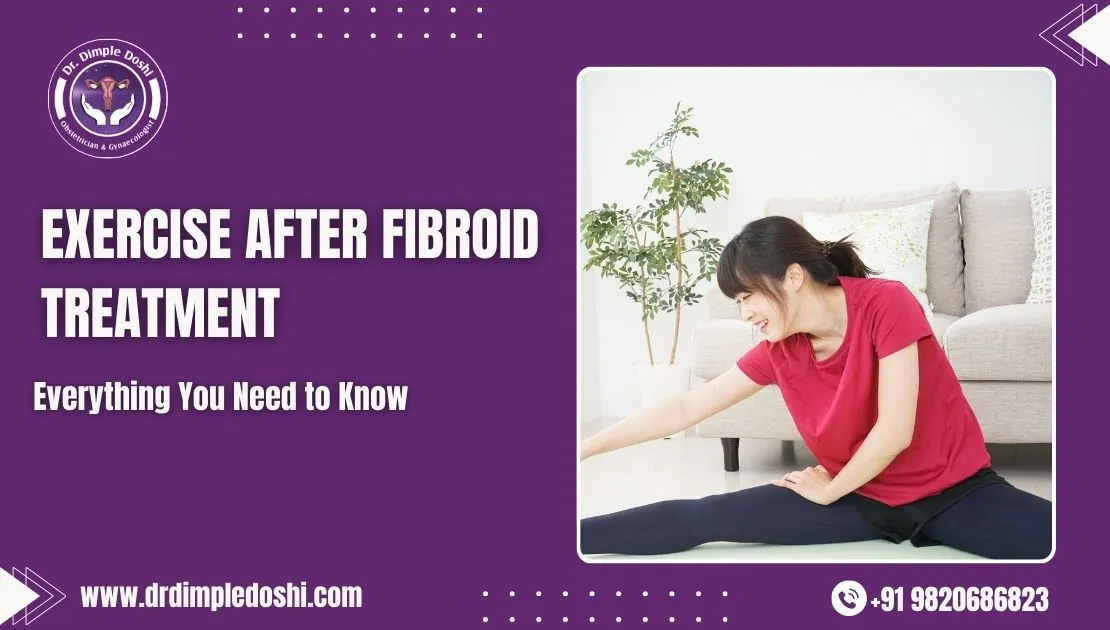
The truth is: movement helps recovery, but the right type and timing of movement matters. This guide will help you return to activity confidently, without risking pain, bleeding, hernia, or delayed healing.
Get expert treatment options from Dr. Dimple Doshi.
Why Exercise Matters After Fibroid Treatment
A well-planned recovery routine can help you:
- Reduce bloating and gas pain (especially after laparoscopy)
- Improve circulation and reduce clot risk
- Boost mood and sleep quality
- Rebuild stamina after anemia and heavy bleeding
- Prevent constipation and pelvic heaviness
- Support long-term weight and hormone balance
The goal is not “workout” first—the goal is healing first, then strength.
First Rule: Your Recovery Depends on the Type of Fibroid Treatment
Different treatments heal at different speeds:
1) Hysteroscopic fibroid removal (via the vagina/cervix)
- No abdominal cuts
- Recovery is faster
- Exercise can restart earlier
2) Laparoscopic/Robotic myomectomy (keyhole surgery)
- Small cuts outside, but healing inside (uterus) is real
- You’ll feel better early, but internal healing still needs time
- If your surgery used advanced 3D laparoscopy (Karl Storz Rubina 4K 3D system), precision is higher, tissue handling is gentler, and recovery is usually smoother—yet timelines still apply.
3) Open myomectomy (laparotomy)
- Bigger incision + deeper muscle healing
- Return to exercise is slower
4) Uterine artery embolization (UAE)
- No surgical cuts, but crampy recovery and fatigue can last days to weeks
5) Hysterectomy (laparoscopic/open/vaginal)
- Healing needs caution because pelvic support tissues are still settling
- Avoid straining early to prevent vault issues or prolapse symptoms
The “Safe Timeline” for Exercise After Fibroid Treatment
Phase 1: Day 1 to Day 7 — “Move, Don’t Train”
Best activities
- Gentle walking inside the home (5–10 minutes, 3–5 times/day)
- Deep breathing, ankle pumps, light stretching (as tolerated)
Avoid
- Gym workouts, running, abs, planks
- Heavy lifting (even grocery bags)
- Squats with weights, jumping, intense yoga
Wellness focus
- Hydration + protein
- Stool-softening foods (constipation is common)
- Sleep and short naps
Aim: reduce stiffness, improve circulation, prevent constipation.
Phase 2: Week 2 — “Increase Walking + Gentle Mobility”
If bleeding is minimal and pain is controlled:
Add
- Longer walks (15–30 minutes/day)
- Light yoga stretches (no deep twists)
- Shoulder/neck mobility, gentle posture work
Still avoid
- Ab workouts and heavy lifting
- High-impact workouts
- Deep core exercises
Aim: restore stamina without strain.
Phase 3: Weeks 3–4 — “Light Fitness Begins”
This depends strongly on your procedure.
Usually safe for many patients
- Brisk walking
- Stationary cycling at low resistance
- Light strength work for arms/upper body (very light weights)
- Easy yoga flows (no extreme inversions)
Not yet
- Crunches/planks
- HIIT
- Running
- Heavy squats/deadlifts
Aim: regain strength gently while protecting pelvic healing.
Phase 4: Weeks 5–6 — “Controlled Strength + Core Rebuild”
For many patients after laparoscopic myomectomy/UAE/hysteroscopy, this is the phase where you can start structured routines—only if your doctor has cleared you.
Add
- Progressive strength training (light to moderate)
- Pelvic floor-friendly core (breathing-based, deep core activation)
- Swimming (if discharge/bleeding has fully settled and wounds are healed)
Aim: rebuild core strength safely—without pelvic heaviness or spotting.
Phase 5: 6–12 Weeks — “Return to Full Training”
This window is most relevant after:
- Open myomectomy
- Hysterectomy
- Complex fibroid surgeries
Usually safe with clearance
- Running
- HIIT
- Heavier weights
- Full yoga including deeper poses
Aim: return to your preferred fitness style—gradually and sustainably.
Pelvic Floor & Core: The Most Important Part of Your Comeback
After fibroid treatment, many women focus only on weight loss or cardio. But your real foundation is:
Breathing + deep core + pelvic floor coordination
If you rush into crunches and planks too early, you may trigger:
- Pelvic heaviness
- Spotting
- Lower abdominal pulling pain
- Back pain or pressure symptoms
Smarter core starts
- Diaphragmatic breathing
- Gentle transverse abdominis activation
- Posture training
- Guided pelvic floor physiotherapy (if needed)
Wellness After Fibroid Treatment: What Helps Fibroids Stay Away (or Symptoms Stay Controlled)
Fibroids can recur after myomectomy, and symptoms can return if lifestyle factors worsen estrogen dominance and inflammation. Wellness won’t “guarantee prevention,” but it does support a stable internal environment.
Nutrition basics (simple, doable)
- Protein at every meal (healing + hemoglobin)
- Iron-rich foods if you had heavy bleeding (plus Vitamin C)
- High-fiber foods to prevent constipation and reduce estrogen recycling
- Limit ultra-processed food, excess sugar, and alcohol (inflammation support)
- Adequate Vitamin D (test and correct if low)
Stress + sleep: not optional
Chronic stress affects inflammation, cravings, sleep quality, and weight—everything that worsens hormonal imbalance.
Try:
- Fixed sleep-wake time
- 10 minutes daily breathing/meditation
- Sunlight exposure in the morning
- Light walking after meals
Weight and insulin control (especially if you have PCOS/prediabetes)
Insulin resistance can worsen hormonal environment. Even 2–5 kg of healthy fat loss can improve symptoms for many women.
Red Flags: Stop Exercise and Call Your Doctor If You Notice
Do not push through these:
- Fresh heavy bleeding (soaking pads)
- Fever, foul discharge
- Increasing abdominal pain (not improving day by day)
- Dizziness, fainting, severe fatigue
- Calf pain/swelling or breathlessness
- Wound redness, discharge, or worsening swelling
- New pelvic heaviness or bulge sensation (especially after hysterectomy)
A Simple “Return to Fitness” Checklist
Before increasing workouts, ask yourself:
- Am I walking comfortably without pain?
- Is my bleeding/discharge minimal or settled?
- Is my sleep improving?
- Is my appetite and bowel movement normal?
- Can I climb stairs without exhaustion?
If yes, you’re ready to progress—slowly.
FAQs (Quick Answers)
Q1. When can I start walking after fibroid surgery?
Ans. Usually the same day or next day—short, frequent walks are ideal.
Q2. When can I go to the gym after fibroid treatment?
Ans. Often 3–6 weeks after minimally invasive procedures, and 6–12 weeks after open surgery/hysterectomy—depending on healing and your doctor’s clearance.
Q3. Can exercise cause fibroids to come back?
Ans. No. In fact, regular exercise supports weight, insulin control, and inflammation balance, which may help symptom control.
Q4. Is yoga safe after myomectomy or hysterectomy?
Ans. Yes—start with gentle stretches. Avoid deep twists, intense core poses, and inversions until cleared.
Q5. What is the safest core exercise after fibroid surgery?
Ans. Breathing-based deep core activation and pelvic floor-friendly rehab are safest early on.
Still have questions? Get clarity from Dr. Dimple Doshi’s
Final Words: Your Healing Deserves Respect
Fibroid treatment gives you a fresh start—but the best results come when you combine the right procedure with the right recovery plan.
If you’ve had laparoscopic fibroid surgery using advanced 3D precision systems like the Karl Storz Rubina 4K 3D platform, your recovery can feel quicker and smoother—but your body still needs time to heal internally. Move early, strengthen smartly, and build consistency rather than intensity.