“My fibroid was removed… so why am I having the same symptoms again?”
“Is it back? Will I need surgery again? Will it affect my fertility or cause heavy bleeding?”
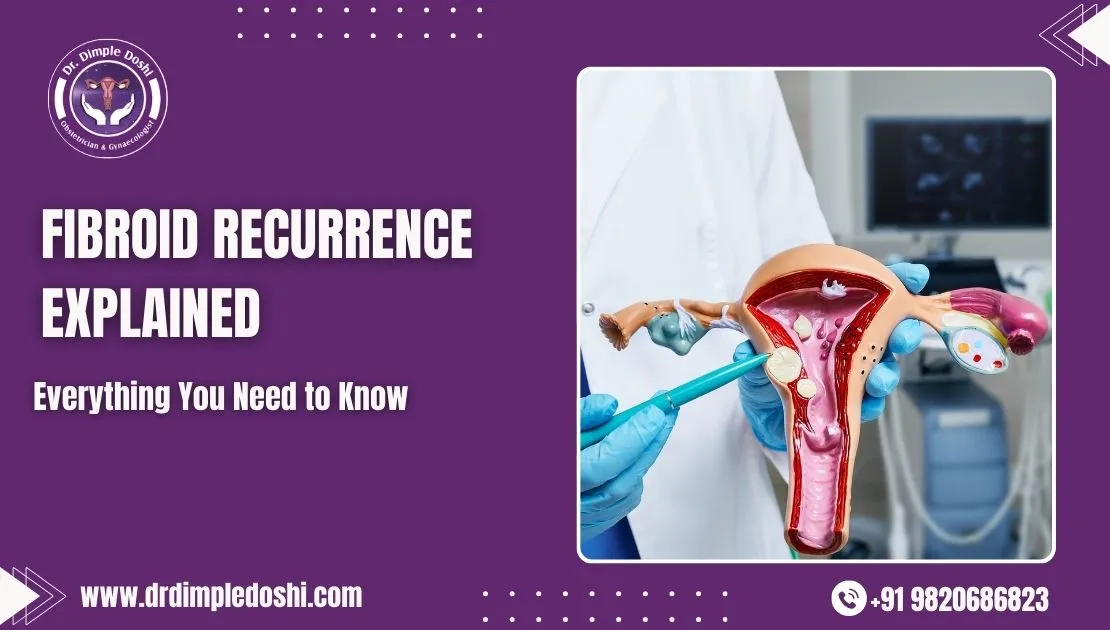
Fibroid recurrence can happen, but it’s manageable. The right plan depends on your age, symptoms, fibroid type/location, anemia status, fertility goals, and how fast it’s growing—and today, many women can be treated with minimally invasive options, including precise 3D laparoscopic surgery.
Get expert treatment options from Dr. Dimple Doshi.
What Does “Fibroid Recurrence” Actually Mean?
Fibroid recurrence usually means one of these situations:
- New fibroids develop in the uterus after earlier treatment.
- Small existing fibroids (that were not removed earlier) grow over time.
- Symptoms return even without major regrowth, because the uterus is sensitive to fibroid location—especially if a fibroid distorts the cavity.
Important point: Recurrence does not automatically mean “something went wrong.” Fibroids are hormone-responsive, and the uterus can form new ones, especially in the reproductive years.
Synonyms you may hear: recurrent fibroids, fibroids coming back, regrowth of fibroids, return of uterine myomas/leiomyomas.
Why Do Fibroids Come Back?
Fibroids are influenced by a combination of hormones (especially estrogen/progesterone), genetics, uterine muscle biology, and local growth factors. Even after excellent surgery, the uterus can still develop new fibroids because:
- Your body still has the hormonal environment that supports fibroid growth (especially before menopause).
- Some fibroids are microscopic at the time of surgery and become visible later.
- Certain uterine patterns are more “fibroid-forming” over time.
Fibroids are benign, but recurrence can still impact quality of life—heavy bleeding, fatigue, pain, and fertility concerns.
Who Is at Higher Risk of Fibroid Recurrence?
Recurrence is more likely when:
- You are younger at the time of treatment (more reproductive years remaining)
- You had multiple fibroids earlier
- There is a strong family history
- There is rapid growth pattern in the past
- You have underlying hormonal/metabolic contributors (like insulin resistance/obesity), which may support growth in some women
Not every woman with these factors will have recurrence—but they help us plan follow-up and prevention strategies.
Symptoms That May Suggest Fibroids Are Back
You don’t need to panic—but you should get evaluated if you notice:
- Heavy menstrual bleeding (soaking pads, clots, prolonged periods)
- Anemia symptoms: fatigue, breathlessness, palpitations, dizziness
- Pelvic heaviness or pressure
- Frequent urination or difficulty emptying the bladder
- Constipation or backache due to pressure
- Painful periods or pelvic pain
- Difficulty conceiving or repeated pregnancy losses (depending on fibroid location)
Tip: Many women ignore early changes until hemoglobin drops. If bleeding patterns change, early ultrasound saves you from late-stage anemia.
How Recurrence Is Diagnosed
A recurrence work-up is usually simple and structured:
- Clinical evaluation: bleeding pattern, pain map, fertility plans
- Pelvic ultrasound (often first-line)
- Saline infusion sonography (if cavity distortion is suspected)
- MRI in selected cases (multiple fibroids, complex mapping, surgical planning, suspected adenomyosis)
We also assess:
- Hemoglobin and iron stores (because treatment planning changes if you are anemic)
- Any associated issues like adenomyosis, polyps, or thyroid/metabolic factors if clinically indicated
How Fibroid Recurrence Is Managed (Step-by-Step)
Management is not one-size-fits-all. The best plan depends on your symptom severity and your uterus goals (fertility vs completion of family).
1) If the fibroids are small and symptoms are mild
You may only need:
- Observation with periodic ultrasound
- Iron supplementation if needed
- Lifestyle optimization (supportive, not “curative”)
This approach is reasonable when fibroids are small, stable, and not affecting bleeding or fertility.
2) If heavy bleeding is the main problem (and you want to avoid surgery)
Options may include:
- Non-hormonal bleeding control (used during periods)
- Hormonal options (chosen based on your age, comorbidities, and bleeding pattern)
- Intrauterine options in appropriate cases (especially if the uterine cavity is not significantly distorted)
Goal here: control bleeding, protect hemoglobin, and improve quality of life, while monitoring fibroid behavior.
3) If fertility is a priority
If you are trying to conceive (or planning future pregnancy), we focus on:
- Whether the fibroid distorts the uterine cavity
- Whether it is affecting implantation, causing miscarriages, or compressing tubes
- Whether removal improves reproductive outcomes in your specific situation
In fertility-focused cases, myomectomy (fibroid removal) is often preferred over uterus-removing procedures—when clinically appropriate.
4) If symptoms are significant or fibroids are large/multiple
This is where procedure-based management helps most. Depending on your case:
- Repeat myomectomy (removing fibroids again) can be considered if uterus preservation matters.
- Hysterectomy may be the definitive option for women with severe symptoms who have completed their family, especially with repeated recurrence and poor quality of life.
Where advanced minimally invasive surgery matters
When surgery is needed, precision becomes everything—especially in repeat surgery.
At Vardaan Hospital, many suitable cases are managed using 3D laparoscopic surgery with the Karl Storz RUBINA 4K 3D system, which supports:
- Better depth perception and anatomy clarity
- More controlled dissection (very helpful in repeat surgeries)
- Smaller cuts, faster recovery, less visible scarring
- Earlier return to routine life—important for working women and mothers
And whenever we remove fibroids laparoscopically, we aim for meticulous technique to reduce tissue trauma and support uterine healing.
(Your final decision still depends on fibroid size, number, location, previous surgeries, and overall health.)
Can Fibroid Recurrence Be Prevented?
Let’s be honest and kind: There is no guaranteed way to prevent recurrence. But you can reduce the chances of late detection and severe symptoms.
What truly helps:
- Regular follow-up (especially if you had multiple fibroids earlier)
- Treating anemia early and not normalizing heavy bleeding
- Managing weight, insulin resistance, and inflammation patterns (supportive role)
- Discussing maintenance options if your bleeding pattern is a concern
The best “prevention” is not fear—it’s a plan.
When Should You See a Gynecologist Urgently?
Seek care quickly if you have:
- Bleeding soaking pads every 1–2 hours
- Severe fatigue, dizziness, breathlessness (possible anemia)
- Sudden severe pelvic pain (rarely torsion/degeneration or another acute cause)
- Rapidly increasing abdominal size
- Fertility concerns with a known fibroid history
If you’re in Goregaon West or nearby, early assessment can prevent prolonged anemia and avoid emergency situations.
FAQs
Q1. Is fibroid recurrence common?
Ans. It can happen, especially in reproductive years—more so if you had multiple fibroids earlier. It does not mean your previous treatment failed.
Q2. Can fibroids grow back after myomectomy?
Ans. The removed fibroid does not “regrow,” but new fibroids can develop or small ones can enlarge over time.
Q3. Will I need surgery again if they return?
Ans. Not always. Many women can be managed with observation or medical therapy. Surgery is considered when symptoms are significant, fibroids are large, or fertility is affected.
Q4. Does menopause stop recurrence?
Ans. Fibroids often shrink after menopause because hormone levels reduce. But any new bleeding after menopause needs evaluation.
Q5. Can recurrence affect pregnancy?
Ans. It depends on fibroid location and size. Cavity-distorting fibroids can affect implantation or increase miscarriage risk. Many women still have healthy pregnancies with careful monitoring.
Still have questions? Get clarity from Dr. Dimple Doshi’s
Final Words:
If you’ve had fibroids before, it’s natural to feel anxious when symptoms return. But recurrence is not the end of the road—it’s simply a sign that your uterus needs reassessment. With today’s tailored planning and minimally invasive options, including precise 3D laparoscopy, you can move from fear to clarity—and from symptoms to stability.