Introduction
Many women don’t realize they have fibroids until life starts revolving around pads, painkillers, tiredness, and constant toilet breaks. In clinical practice, the real problem is often not just the fibroid—but the delay. When fibroids are identified early, treatment choices are wider, anemia is easier to control, and fertility planning becomes safer and calmer.
Tired of heavy, exhausting periods? Get expert treatment options from Dr. Dimple Doshi.
What are the early signs of uterine fibroids?
Early fibroid symptoms often show up as changes in periods, energy levels, or pelvic pressure—and are frequently mistaken as “normal” hormonal changes.
Early Signs of Fibroids You Shouldn’t Ignore
1) Your periods suddenly become heavier than your normal
If you’re soaking pads frequently, passing clots, or avoiding outings because of fear of leakage, this is not “just hormonal.” It can be a fibroid warning sign.
2) Bleeding lasts longer than 7 days
Long periods are one of the earliest clues, especially if this is a new change.
3) You feel tired all the time—even after rest
Heavy bleeding can silently cause iron-deficiency anemia, leading to fatigue, breathlessness on stairs, palpitations, headaches, and low stamina.
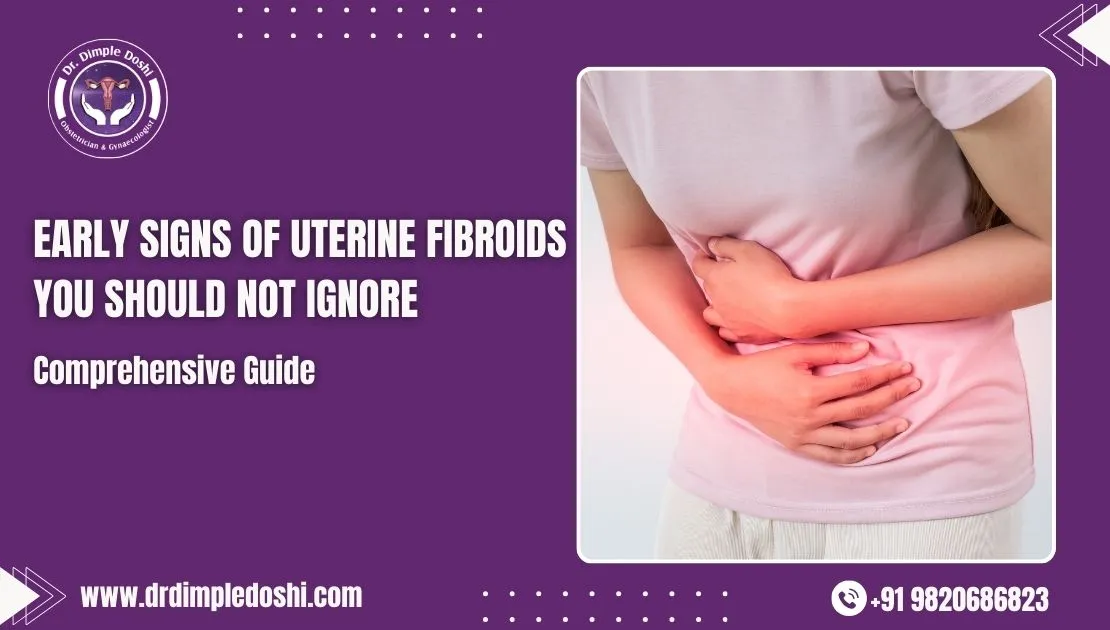
4) New pelvic heaviness, dragging pain, or bloating
Many women describe a feeling of fullness in the lower abdomen or pressure inside the pelvis. This sensation should not be ignored.
5) Frequent urination or trouble emptying the bladder
Fibroids can press on the bladder and cause urinary frequency that may feel similar to a urinary infection.
6) Constipation or rectal pressure
This is more common when fibroids are located on the back side of the uterus.
7) Pain during intercourse
Certain fibroid locations can cause deep discomfort during intimacy.
8) Difficulty conceiving or repeated miscarriages
Some fibroids distort the uterine cavity or interfere with implantation, making this an important symptom to evaluate.
9) Spotting between periods
While not the most common symptom, persistent spotting should always be assessed.
10) Noticing a bulge or fullness in the abdomen
Visible or felt abdominal fullness can occur as fibroids increase in size.
Dr. Dimple Doshi’s Tip:
If a symptom is new, progressive, or affecting your daily routine, it deserves evaluation—even if it feels manageable right now.
Why is early diagnosis of fibroids so important?
Early diagnosis allows simpler treatment, better anemia control, safer fertility planning, and helps avoid emergencies or complex surgery later.
Why Early Diagnosis Is So Important
Fibroids are common, but late diagnosis makes life harder. Early detection helps you:
- treat anemia early (before it becomes severe)
- control bleeding before it disrupts daily life
- plan fertility and pregnancy safely
- avoid emergency situations like sudden heavy bleeding
- keep treatment simpler (small fibroids = more options)
In short: early diagnosis protects your blood levels, uterus, and future choices.
What can happen if fibroid symptoms are ignored?
Ignoring fibroid symptoms can gradually lead to anemia, pressure problems, fertility stress, and more complex treatment needs over time.
What Can Happen If You Ignore Fibroid Symptoms?
This is where many women get stuck—they “manage” symptoms for months or years until the body eventually forces action.
1) Severe anemia
Ignoring heavy bleeding can cause very low hemoglobin levels, leading to exhaustion, dizziness, breathlessness, reduced immunity, and sometimes the need for iron infusions or blood transfusion.
2) Fibroids can grow and cause pressure problems
As fibroids increase in size, they can worsen bladder frequency, constipation, pelvic pain, and a constant feeling of heaviness.
3) Fertility and pregnancy complications (depending on type and location)
Untreated fibroids may contribute to difficulty conceiving, higher miscarriage risk, preterm birth, or abnormal baby position during pregnancy. The impact varies by fibroid type and location but is clinically important.
4) Treatment becomes more complex later
Larger or multiple fibroids often limit conservative treatment options. Delaying care can increase the likelihood of needing stronger or more invasive interventions later.
5) Other causes of abnormal bleeding may be missed
Not every heavy bleed is caused by fibroids. Delayed evaluation can postpone diagnosis of conditions like endometrial polyps, endometrial hyperplasia, or other uterine disorders.
How are uterine fibroids confirmed?
Fibroids are usually confirmed with a pelvic ultrasound, along with blood tests to assess anemia when bleeding is heavy.
How Do You Confirm Fibroids?
Diagnosis usually starts with:
- a simple pelvic ultrasound
- blood tests such as CBC and iron studies if bleeding is heavy
Early testing is straightforward and often reassuring.
What are the surgical treatment options for fibroids?
Treatment depends on your symptoms, fibroid size and location, age, and future pregnancy plans. When surgery is needed, options may include:
- Hysteroscopic myomectomy
- Laparoscopic myomectomy
- Laparoscopic hysterectomy
- Abdominal myomectomy / abdominal hysterectomy (selected cases)
For suitable surgical cases, 3D laparoscopy (Karl Storz Rubina 4K 3D system) supports greater precision and depth perception, which is especially helpful for fine dissection and smoother recovery.
Still have questions about heavy bleeding, periods, or anemia? Get clarity from Dr. Dimple Doshi’s expert team.
Conclusion
If your period pattern changes, if you’re getting tired easily, or if you feel pelvic pressure—don’t normalize it. Fibroids are manageable, but ignoring symptoms can push you into anemia, fertility stress, and bigger treatment later. Early diagnosis is not fear—it’s control.