When medicines no longer control symptoms—or fibroids are large, recurrent, or rapidly growing—surgery becomes the most reliable treatment.
The two main surgical options are myomectomy (removal of fibroids, uterus preserved) and hysterectomy (removal of uterus, permanent solution). The right choice depends on symptoms, fertility plans, fibroid anatomy, and personal priorities.
Tired of heavy, exhausting periods? Get expert treatment options from Dr. Dimple Doshi.
When is surgery usually recommended for uterine fibroids?
Surgery is advised when fibroids cause persistent symptoms, complications, or fail to respond to non-surgical treatment.
Surgery is commonly recommended when there is:
Heavy menstrual bleeding causing recurrent anemia
Severe pain, pelvic pressure, bloating, or heaviness
Bladder or bowel pressure symptoms (frequency, constipation)
Infertility or recurrent pregnancy loss due to cavity-distorting fibroids
Rapid growth or suspicious imaging features requiring evaluation
Fibroids not responding to non-surgical management
Recurrent fibroids
Large fibroids
Multiple fibroids
What is myomectomy and when is it preferred?
Myomectomy removes fibroids while preserving the uterus and is preferred when fertility or uterine preservation matters.
What myomectomy is
Surgical removal of fibroids with reconstruction of the uterus
Preferred when:
You want future pregnancy
You wish to keep the uterus for personal reasons
Fibroids cause symptoms but uterus preservation is important
What are the types of myomectomy?
The type of myomectomy depends on fibroid location, size, and number.
Detailed explanation
For submucosal or intracavitary fibroids
For many intramural or subserosal fibroids
Open (abdominal) myomectomy
For very large uterus
Multiple large fibroids
Difficult fibroid locations
When minimally invasive surgery is not suitable
Why does 3D laparoscopy matter in myomectomy?
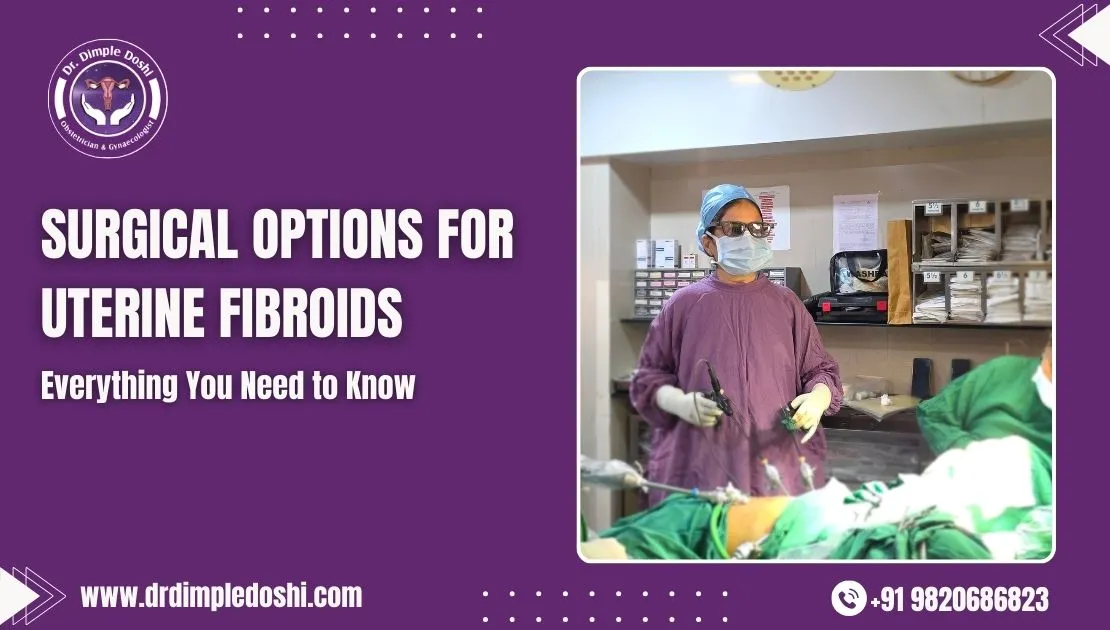
3D laparoscopy improves depth perception and precision during fibroid removal and uterine repair.
Detailed explanation
When laparoscopic myomectomy is planned, Karl Storz Rubina 4K 3D helps with:
Clear fibroid enucleation and plane identification
Better bleeding control
Accurate multilayer uterine suturing
This supports:
Faster recovery
Smaller scars
Careful tissue handling, especially important when fertility is a concern
What are the pros and limitations of myomectomy?
Myomectomy preserves fertility but fibroids can recur over time.
Detailed explanation
Pros
Preserves the uterus and future pregnancy potential
Relief from heavy bleeding and pressure symptoms
Minimally invasive approaches often mean quicker recovery
Limitations
Fibroids can recur
Bleeding risk may be higher in large or multiple fibroids
Some women may need more than one surgery over time
What is hysterectomy and when is it recommended?
Hysterectomy removes the uterus and provides a permanent cure for fibroids.
Detailed explanation
Hysterectomy is usually advised when:
Family is complete
A permanent solution is desired
Symptoms are severe and recurrent
Fibroids are large, multiple, or repeatedly returning
There is suspicion of associated uterine pathology
What are the types of hysterectomy?
The surgical route depends on uterus size, anatomy, and complexity.
Detailed explanation
Total laparoscopic hysterectomy (TLH)
Vaginal hysterectomy (when suitable)
Abdominal hysterectomy
Used when the uterus is very large or complex
How does 3D laparoscopy help in hysterectomy?
3D laparoscopy allows precise dissection, better safety, and quicker recovery when hysterectomy is done laparoscopically.
Detailed explanation
When laparoscopy is feasible, Karl Storz Rubina 4K 3D supports:
Safer identification of vital structures
Reduced blood loss in many cases
Smaller incisions and faster recovery compared to open surgery
What are the pros and limitations of hysterectomy?
Hysterectomy permanently solves fibroid problems but ends fertility.
Detailed explanation
Pros
Permanent cure for fibroids
No recurrence
No future fibroid-related heavy bleeding
Limitations
Pregnancy is not possible after surgery
Recovery depends on route and complexity
Emotional readiness is important for many women
How do you choose between myomectomy and hysterectomy?
The decision depends on fertility goals, symptom severity, and fibroid anatomy.
Detailed explanation
Choose myomectomy if:
You want pregnancy now or in the future
Fibroids are affecting fertility or distorting the uterine cavity
Preserving the uterus is important to you
Fibroids are technically removable with good reconstruction
Choose hysterectomy if:
You want a one-time definitive cure
Family is complete and symptoms are significant
Fibroids are large, multiple, and recurrent
The uterus is severely affected or has associated disease
What does your gynecologist evaluate before recommending surgery?
Surgical planning depends on fibroid anatomy, health status, and reproductive goals.
Detailed explanation
Before deciding, your doctor assesses:
Fibroid type (submucosal, intramural, subserosal, cervical)
Size and number of fibroids
Uterine cavity involvement
Degree of anemia and overall health
Past surgeries and adhesions
Possible endometriosis
Age and pregnancy plans
FAQs: Myomectomy vs Hysterectomy
Q1. Which is better—myomectomy or hysterectomy?
Ans. Neither suits everyone. Myomectomy preserves fertility; hysterectomy offers a permanent cure.
Q2. Can fibroids come back after myomectomy?
Ans. Yes. New fibroids can develop because the uterus remains.
Q3. Does hysterectomy always remove ovaries?
Ans. No. Ovaries are often preserved when appropriate.
Q4. Is laparoscopy always possible?
Ans. Not always. Suitability depends on fibroid size, location, prior surgeries, and anatomy.
Still have questions about heavy bleeding, periods, or anemia? Get clarity from Dr. Dimple Doshi’s expert team.
Conclusion
Myomectomy preserves the uterus and fertility, while hysterectomy permanently ends the fibroid problem.
The right choice is the one that aligns with your symptom severity, fibroid anatomy, fertility goals, and personal priorities. When surgery is indicated and laparoscopy is feasible, advanced 3D laparoscopic surgery (Karl Storz Rubina 4K 3D) allows greater precision and smoother recovery—used only when surgery is the appropriate step.